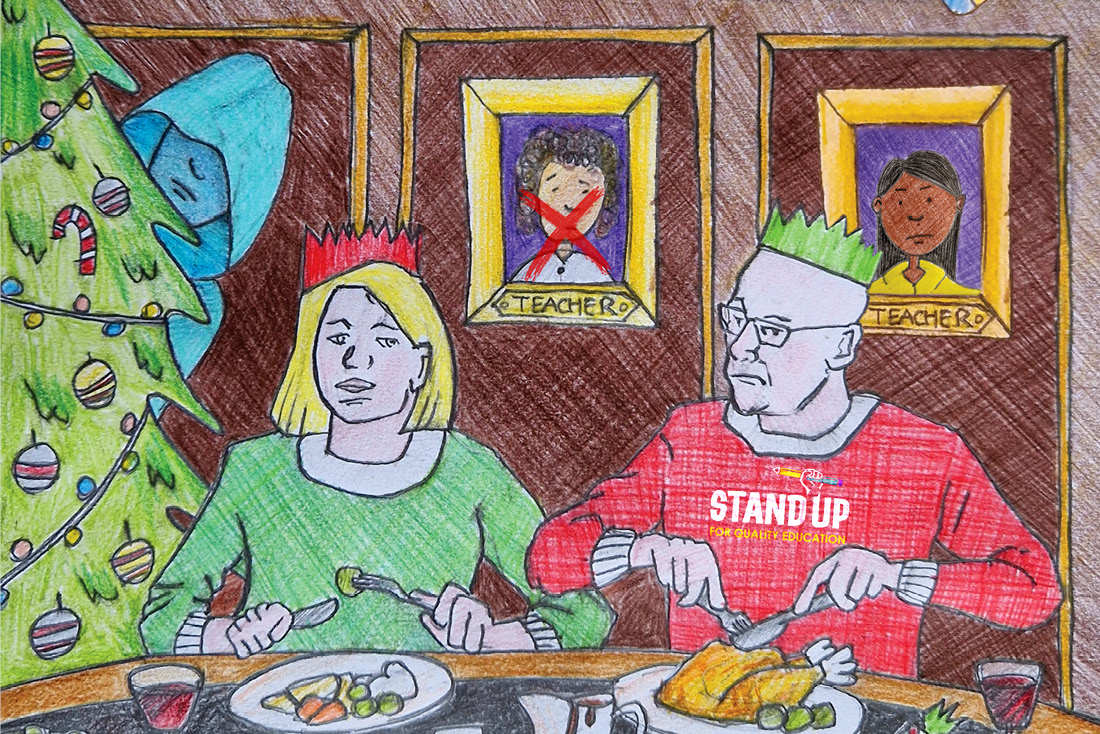
The Festive season is a busy time, with many differing priorities demanding our attention.
You might not have started your shopping yet, maybe you have hundreds of cards to write, perhaps you have a load of gifts to wrap, and that big dinner isn’t going to organise and cook itself, now is it?
But, wherever you are and whatever your plans, there is one thing that you simply must remember to do – cast your vote in the EIS statutory workload ballot before it’s too late!
Cast your vote now!
With the Christmas post being the way that it is, please remember to mark your crosses on your ballot paper and return it in the pre-paid envelope as soon as possible. The ballot closes on the 14th of January, so make a holiday commitment to complete and return your ballot paper as soon as you can – it’s too important to leave to the last minute.
Why have I received two ballot papers?
Good question, and well spotted. When the ballot opened, and ballot papers were initially sent out, there was a slight typographical error in the ballot paper. This error, though small, created the potential of a legal challenge to the result of the ballot. For that reason, a second ballot paper was issued to replace the first one.
How do I know which ballot paper to use?
The correct ballot paper has a blue triangle in the bottom right-hand corner. Please ensure that you use this ballot paper when recording and returning your vote. Only votes cast on the ballot paper with the blue triangle at the bottom will be counted.
I already voted on the first ballot paper – should I vote again?
Yes. Any votes received on the first ballot paper will not be counted. You will not be voting twice by completing and returning the second ballot paper, as your first ballot will not be counted. Please ensure that you complete and return the ballot paper with the blue triangle to ensure that your vote counts.
The Executive is recommending that I vote Yes-Yes in the ballot – why is that?
The EIS Executive strongly believes that an overwhelming vote in favour of industrial action is the best way of ensuring that the promises made to teachers are delivered. After almost five years of dither and delay from the Scottish Government and COSLA, with no tangible progress towards delivery of the promised reduction in class contact time, we must increase the pressure on the politicians to deliver.
Why is the EIS so focused on reducing class contact time as a means to tackle workload?
The current Scottish Government is bound by a commitment made in the 2021 SNP manifesto to reduce teachers’ class contact time to a maximum of 21 hours per week. It is this commitment, freely made ahead of the 2021 Scottish Parliament election, that we are pushing to be delivered. Having made this commitment, the Scottish Government and COSLA must deliver it.
What about promoted staff – does a class contact time reduction help with our workload?
Our workload dispute is designed to help all teachers, including Principal Teachers, Deputes and Headteachers. We believe that having more teachers to deliver the current amount of teaching would assist promoted staff by spreading every teacher’s teaching load amongst more staff, including for promoted staff.
This will result in more staff, more flexibility, happier, healthier staff with fewer absences and better learning outcomes.
We will negotiate a resolution to ensure that there is no detriment, or increase in workload, for Principal Teachers, Deputes and Headteachers as a result of reducing weekly class contact time.
I don’t want to strike – should I still vote?
Absolutely, please use your vote. No-one wants to take strike action, but the EIS Executive believes that an overwhelming Yes-Yes vote will significantly increase the pressure on the Scottish Government and COSLA to deliver the promised reduction in class contact time. For that reason, we recommend to all members to vote Yes-Yes.
We are looking at potential action before the Scottish elections – is this action political?
While the EIS is not party-political, and is not affiliated to any political party, all industrial action is ‘political’ to a certain extent. The aim of the ballot and potential action is to exercise political pressure on both the Scottish Government and COSLA (which represents local authorities of all political make-ups) to deliver what was promised to Scotland’s teachers. No individual political party is being specifically targeted in this action.
I’m still unsure of how to vote – where can I find more information?
The best place to find more information on the EIS workload campaign, and on the statutory workload ballot, is the EIS website.
There you will find all the key information on the campaign, and the reasons why the EIS Executive is encouraging all members to vote Yes to strike action and Yes to Action Short of Strike.
What happens after the ballot closes?
The statutory postal ballot closes on the 14th of January, which is the final date for the receipt of completed ballot papers. Should the ballot deliver a legal mandate for industrial action, the EIS Executive will determine the next steps to be taken.
The first step would be to use such a result to press for a negotiated agreement and, should this be unsuccessful, then a move to industrial action would be the next step.
Can we really win this dispute over workload?
Yes! Experience has shown us that the prospect of industrial action is a powerful tool, which has helped to secure victories in past campaigns. With an election looming, no politicians will be savouring the prospect of industrial action in schools – a victory on workload is there to be won.