

















SEJ Digital
Democracy is key to collective strength
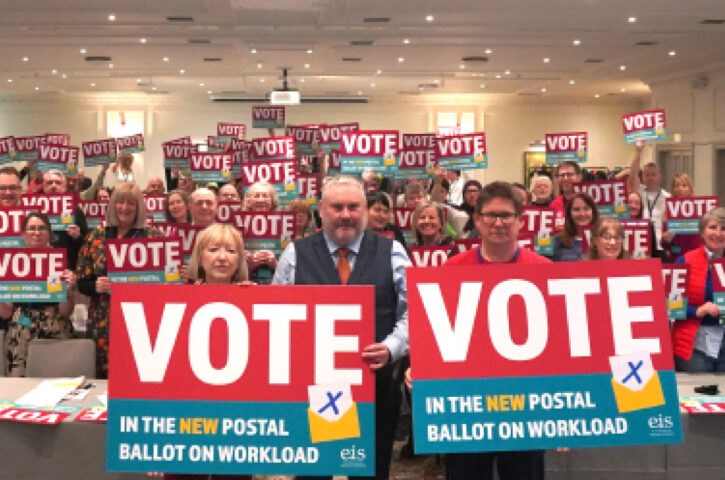
As members will be aware, the EIS has opened a new statutory industrial action ballot over teacher workload. This ballot is a vital part of the campaign to cut workload, create jobs for new teachers, and ensure that government promises on reducing class contact time are delivered.
It is essential that every member who is eligible to vote in this statutory ballot does so, by completing and returning their postal ballot paper by the closing date of the 4th of March. If you have not yet voted, please do so as soon as possible to ensure that your vote counts.
We have been here before in recent months. Last year, a workload consultation with EIS members confirmed overwhelming support for industrial action, with 92% of members in favour of Action Short of Strike and 83% of members in favour of strike action. Turnout in that online consultation was 64%.
Following this, the recent statutory ballot was held, and there was a consistent high level of support for industrial action amongst those who voted – with 93% in favour of ASOS and 86% in favour of strike action.
The big difference was turnout, with slightly under half – 46.5% – of members completing and returning their statutory ballot paper within the voting period.
There are, of course, many reasons why turnout may have declined. By law, statutory ballots must be held by post – a component of highly restrictive trade union law introduced by the former UK Conservative government, deliberately designed to inhibit lawful trade union action.
So, the nature of the ballot is clearly a factor. The postal service is often under great strain, and can at times be unreliable. But it is vital that we overcome these obstacles put up by this discredited, and scheduled for repeal, law.
Another aspect of that law is the extremely strict ballot thresholds placed on vital public services, including education. For an industrial action mandate to be gained, unions are held to two very challenging thresholds – 40% of the total number of all members eligible to vote must vote for action, and turnout in the ballot must also be over 50%.
Since this law was introduced, many public sector trade unions have fallen foul of these thresholds, despite strong support for action from those who voted. This has been the experience of the recent EIS ballot, with very strong support for action being thwarted by turnout below the threshold.
The Scottish Government and COSLA will have been delighted by the recent ballot result, as it potentially lets them off the hook on tackling teacher workload. Having done virtually nothing for five years to deliver their promise to tackle workload, they were only shaken into belated, though half-hearted, action by the threat of industrial action in our schools.
They will look at the fact that fewer than half of EIS members voted as a sign that teachers do not care about workload being reduced. Politicians tend to react to direct pressure on them, particularly ahead of an election.
The Scottish Government clearly felt under pressure during the ballot, but are now feeling like this pressure has been relieved.
This new ballot is a chance to shake them from their complacency, and compel them to finally deliver firm actions on reducing teacher workload, creating promised jobs for new teachers, and delivering their manifesto commitment on class contact time.
Unions are collective bodies, and our strength is through working together and standing together to pursue positive change. Democracy is a key component of our union, and using your vote and having your say is an essential part of our collective strength.
Whatever your view on the current workload dispute, and no matter what your view on the call to take Strike Action or Action Short of Strike, the most important thing you can do this month is to cast your vote in the new statutory ballot on workload.
Whether you are voting Yes or No, please use your vote to ensure that your voice is heard.