
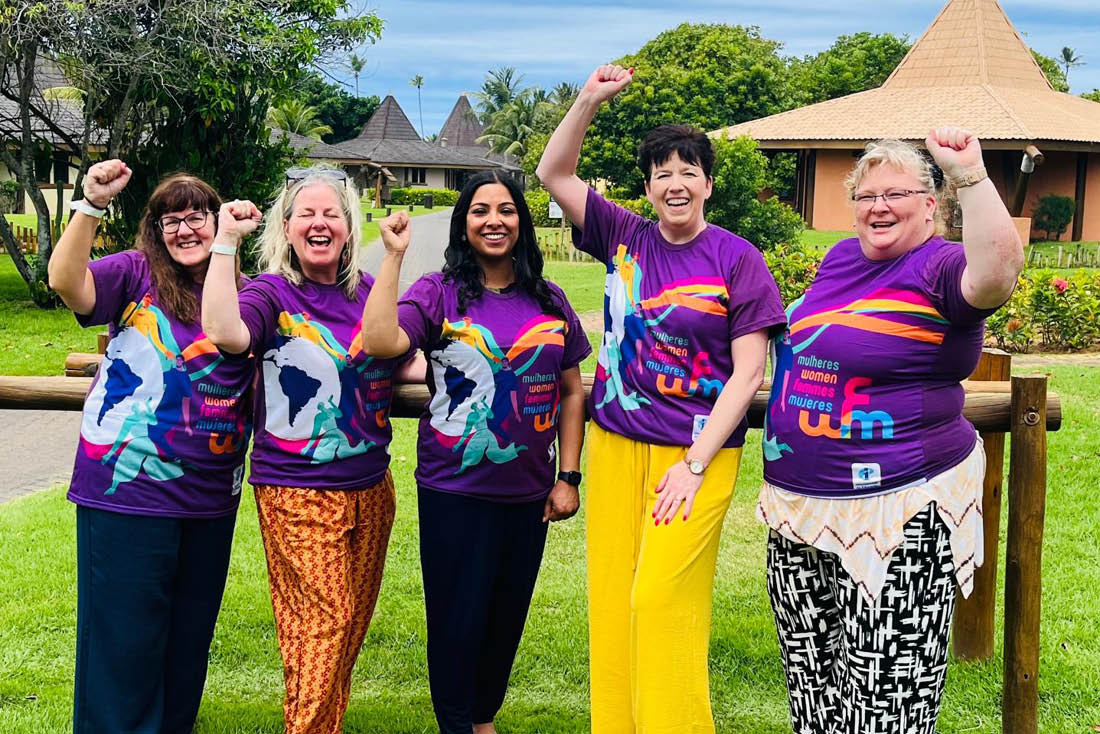
In the current context of threats to democracy and far right forces seeking to erode the decades of progress won on gender-equality and civil rights, it is no surprise that this inspiring conference title led over 300 women from education trade unions across 55 countries to travel to Bahia, Brazil for the 5th Educational International World Women’s Conference between 15th and 17th September.
And the EIS played its part in this transformational gathering. Here are some reflections from EIS participants.
Nicola Fisher, the EIS Equality Committee Convener, moderated a session on fighting misogyny in the classroom:
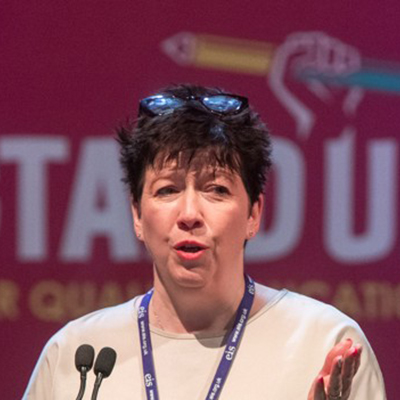
“It was a privilege to lead a breakout session at the EI World Women’s Conference on behalf of the EIS, showcasing our work on misogyny in the classroom. The rise of misogyny across the globe, often associated with the rise of the far right and the online manosphere, is a matter of grave concern for all trade unions.
Unfortunately, many of our sisters around the world, and here in Scotland, continue to experience persistent and pervasive misogyny at work and in society as a whole, manifesting as gender-based micro aggressions, harassment, systemic discrimination and / or physical and sexual violence and aggression.
We shared our ongoing EIS work on misogyny – including our Many Good Men resources – and highlighted the work of the TIE campaign in addressing these issues. Following this, we heard from a very strong panel of women speakers working in this area, who highlighted the challenges they were facing in their own contexts and the way in which they were fighting misogyny. Gladys Marquez (NEA, USA) described the additional layers of sexism and misogyny which come with the attacks on immigrants in the US.
Precious Makitla (SADTU, South Africa) outlined her union’s work on challenging patriarchal structures and gendered responsibilities, and the ways in which these affect women’s rights and career progressions. Correna Haythorpe (AEU), Australia) focussed on the role played by social media, especially in regard to misogyny towards young women and girls.
The discussion which followed was both powerful and harrowing, with many sisters in the room sharing their own experiences or that of their members. Sisters from more than one country shared with us examples of women teachers who had been murdered by male colleagues or former husbands and partners.
Others shared their experience of being sexually assaulted whilst at work. A number of sisters described the kind of microaggressions they are facing on a daily basis. Delegates around the room also shared strategies to fight back against this rolling tide of misogyny and expressed their determination to continue to fight against the terrible injustice and violence faced by women and girls around the world.”
Inspired by a keynote speech by Wangari Kinoti (Action Aid International) on understanding the teacher shortage through a gendered lens, Claire Robertson, Vice Convener of the EIS Equality Committee, spoke of the impact of this input.
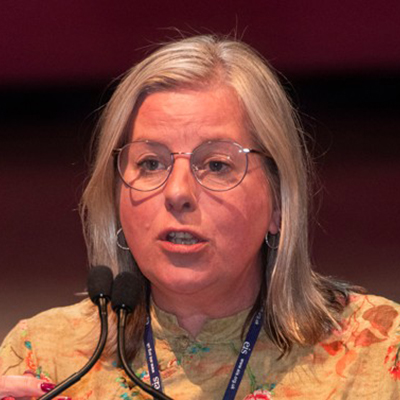
“It was staggering to learn of the world’s need for 50 million more teachers to ensure every child’s fundamental right to education is met.
Low salaries compared to comparable professions, poor working conditions, excessive workloads and emotional labour, and a lack of respect for the profoundly feminised profession are fuelling the workforce crisis in education.
Wangari Kinoti was clear that the teacher supply issue is not about a shortage of people willing to teach but rather a lack of willingness on the part of governments to value and prioritise teaching and education as a fundamental good.
She stressed that women educators are not only workers in an underfunded system, but people who are actively subsidising that system with their labour, their time, their emotional reserves, and often with their own money. Citing the triple burden, she explored the intersections of care, women’s labour and structural violence.
Those listening were left in no doubt as to the importance of resisting the systemic undervaluing of teachers’ work and in standing together against the threats that women around the world face, not only to their jobs but to their lives.”
Claire also attended a session on ‘Women Organising for Peace and Solidarity’, where sisters from Gaza, Ukraine and Columbia spoke of feeling fear every night and waking with relief every morning – not living but surviving. They described their experience of education within the context of war, witnessing murder, paramilitary organisations assuming control of educational establishments, drone strikes and terrorism.
Claire reflected on the power of their words, “We should never have to live in such conditions where we need to develop resilience but work in a system that is safe and secure. And they were right. Resilience should never be a requirement for survival.”
Valerie Inkster, the EIS Vice President, highlighted a session focusing on raising the status of Early Childhood Education (ECE). The session examined the persistent gender norms connected to care work, motherhood and women’s unpaid labour and their impact on the status, recognition and working conditions of teachers in ECE.
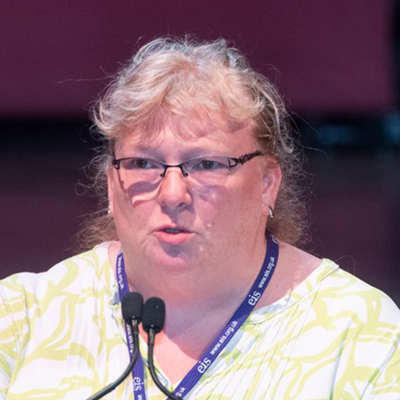
Acknowledging the common challenges, Valerie said, “There were many examples given of issues faced around the world regarding early years education, all of which resonated with our experience in Scotland – a dearth of teaching staff; systemic underfunding; and a lack of recognition of the value and importance of education at this vital stage.
“Teachers in New Zealand are fighting to maintain pay parity across all sectors so that early years educators are not disadvantaged, whilst in Benin, many early years settings have had to close due to insufficient staffing or funding and Guinea has only just recognised early years education in the past
three years.
“Despite the challenges, everyone present spoke passionately about the importance of early years education in responding to children’s holistic needs; in addressing the gaps resulting from poverty; and in striving for equity and improved outcomes for children and left with a renewed resolve to continue our fight for quality education for our youngest learners.”
Sunita Nayyer, Chair of the EIS Anti-Racist Sub-Committee, summed up her experience with this powerful call to action, “Being part of a delegation of more than 300 women from across the world was a truly inspiring and powerful experience.
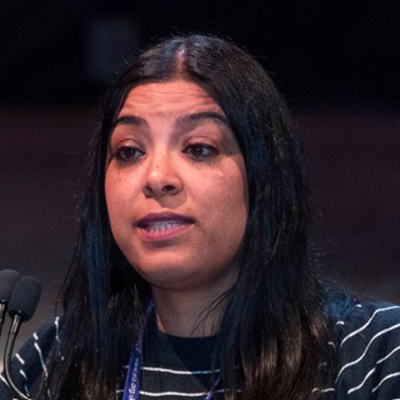
What really mattered was the strength, courage and determination of the women I met and the stories they shared. Women spoke openly about the struggles they had faced, the barriers they had overcome and the inequalities they continue to challenge.
Their experiences reinforced something fundamental: before women can influence decisions, they must have the opportunity to participate. We cannot expect women’s voices to shape our unions, workplaces and communities if they are not given the space and opportunity to be heard. Removing the barriers that prevent women from taking part, must be part of our fight for gender justice.
Change does not always begin with a big campaign or major decision. Sometimes it starts with a small ‘micro-action’ – encouraging a colleague to attend a union meeting, challenging inequality when we see it, or simply making space for another woman to be heard. These actions may seem small, but collectively they can shift culture.
Inequality will not disappear on its own and silence will not create equality. We all have a responsibility to challenge the barriers that prevent women from participating fully and equally in our unions, workplaces and communities.
For me, the message from Brazil was clear: when women support women, we strengthen our collective power. By rising, standing and acting together, we can challenge inequality and build a stronger, more inclusive society and union, where women are not simply represented, but are visible, confident and powerful leaders.
When women rise together, we turn equality from an aspiration into transformation and build a future where every woman can participate, influence, and lead.”