
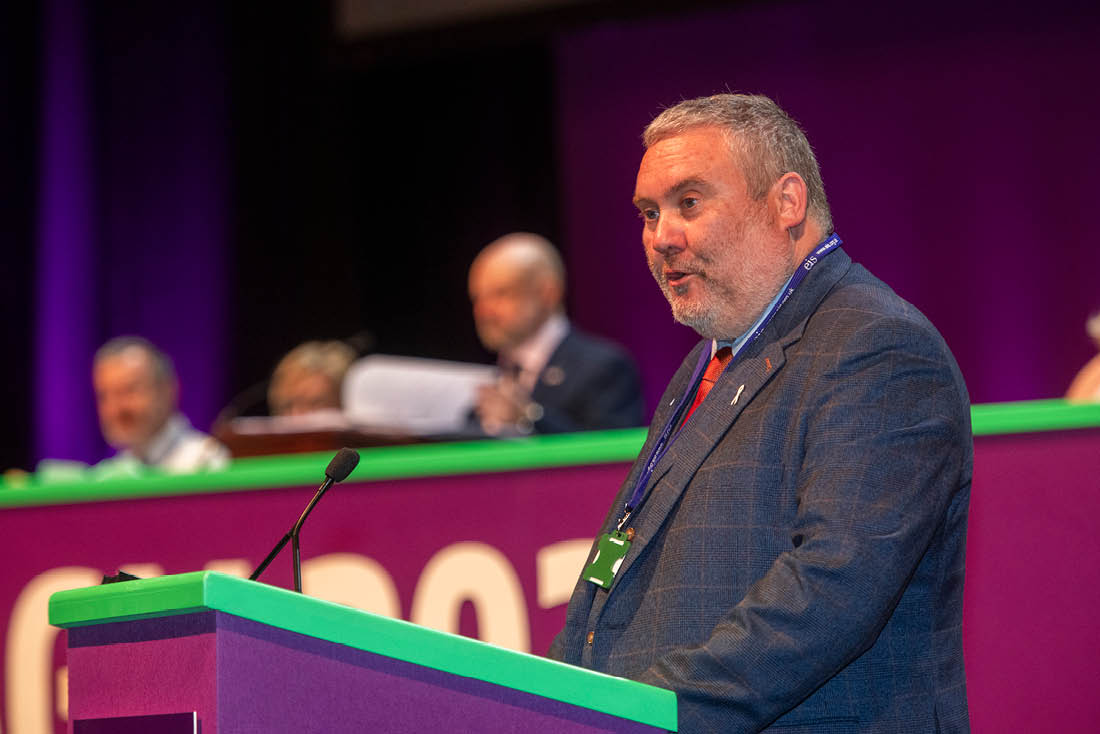
The SEJ spoke to new EIS President Mark Smith, and found out more about his teaching, trade union and even his little-known Olympic background.
Can you tell us a little bit about your career in education?
It might be hard to believe but I started teaching as a PE teacher in 1993. I worked in several schools in Ayrshire, however, due to the difficulties getting a permanent post in Strathclyde – where posts were allocated by the number of days you had worked – I decided to apply for a behaviour support role, these were created using Alternative to Exclusion money.
I was successful in the interview and this was the start of 27 years at Ardrossan Academy. I enjoyed the role, originally it was not part of learning support, but over time it became part of the Pupil Support Department.
This involved working with pupils both in school and also involved some outdoor education activities – which I loved! I was proud eventually to become Principal teacher of Pupil Support, a role which has seen many changes over the year including teaching of certificate classes.
What about your trade union and EIS background?

I have always been a member of the EIS and whilst I attended branch meetings, I didn’t initially play an active role. When talking to the school reps, I asked to become more involved, mainly to learn from the two experienced reps before they retired.
This led to joining the local executive, which allowed me to build up my knowledge of EIS matters locally.
I attended my first AGM in 2005 and have attended every year since. Speaking to a motion for the first time was daunting but I’m glad I did and encourage other delegates to participate in the debates. Having undertaken the Learning Rep course I was involved in organising CLPL both in North Ayrshire and pan-Ayrshire events including teacher wellbeing initiatives.
I became a Health and Safety Rep and then the School Rep. I am currently the Convener of the Local Association and enjoy working with the local authority to support members. Nationally, I joined Council and the Equality Committee, and I have also served on the Employment Relations Committee, Education and Executive.
Again, I would encourage Council members to join committees and support the national work of the EIS.
You’ve recently been out on picket lines supporting colleagues currently on strike – why do you see that as so important?
No teacher or lecturer wants to take strike action as they would rather be teaching. However, when members decide that strike action is necessary it is important for them to realise that they have the support of the EIS.
This is particularly important if the branch striking is smaller in number. It is important to show solidarity with our striking members, whether it be over terms and conditions or those fighting for safe working conditions.
What do you see as the key priorities for the EIS this year?
Having won the campaign to reduce class contact time to 21 hours we need to ensure this is implemented. We also have to continue to push forward with our Stand up for Quality Education campaign, with members having previously identified that ASN, Pupil Behaviour and Workload are their main concerns.
With the numbers of pupils with ASN rising we need to campaign for an increase in funding and support for pupils with ASN, we need to address the issues caused by pupil behaviour, particularly in terms of teacher wellbeing and we need to continue to reduce teacher workload.
The reduced class contact time should help but there is more to be done to tackle these issues
Have there been any surprises involved in being an EIS office bearer?
The different demands of being an office bearer were somewhat of a surprise – ranging from speaking at hustings, attending picket lines, being involved in committees and meetings as well as attending local and national demonstrations.
Although varied I have enjoyed every minute of being an office bearer. I have also enjoyed visiting local associations and schools. I always knew the EIS is a great union. However, I didn’t realise just how well we are thought of in the rest of the UK and further afield.
Tell us one surprising or unusual fact about yourself?
I have attended two Olympic games – not as an athlete though! I was involved as part of the anti–doping team working to ensure that the games are clean and that athletes are not cheating using performance enhancing drugs.
I also have a campervan named Dougal and have for the last few years enjoyed travelling to Europe and visiting new places – my favourite place is Bodensee in Germany.